Cameroon/A 100% Made in Cameroon incubator for premature babies
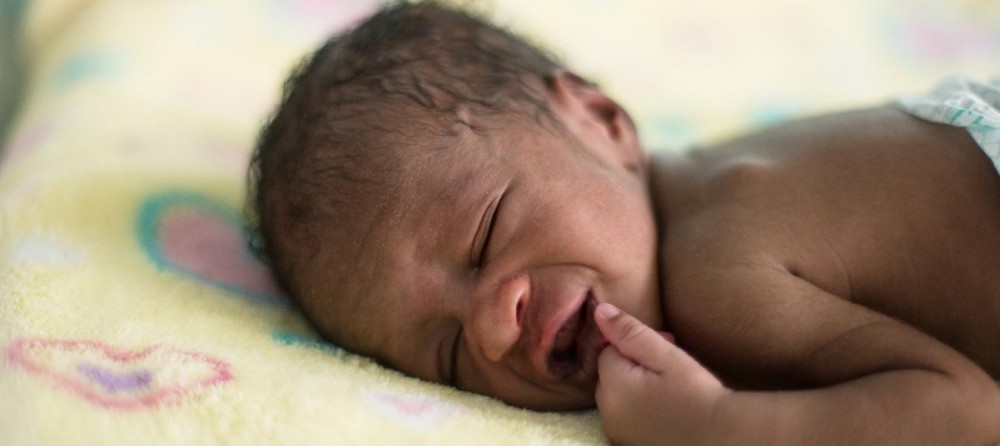
In Cameroon, Serge Armel Njidjou, founder of the fab lab AUI-Techno, has become the champion of the fight against premature infant mortality by imagining a model of neonatal incubator adapted to the very specific needs of his country. A look back with him on the genesis of this already multi-awarded project and on its growth prospects.
From a recognized academic in the digital field to the head of a fab lab, your career path is unique. How did you come to create AUI-Techno?
Serge Armel Njidjou :This idea is the fruit of a long maturation process. I have spent my entire career at the University of Dschang, in the west of Cameroon, in the field of digital technology. At the same time, I was also head of the Industrial Interface Centre. I have always had a passion for entrepreneurship. Within my university, I contributed to the development of incubation structures for several projects.
It was very interesting, but I remained considerably frustrated by the inertia of the university environment, the cumbersome administrative procedures in particular, which considerably slowed down the development and marketing of innovative initiatives. The ideas were there, but they did not lead to anything concrete.
This is why I finally decided, at the end of 2015, to found my own fab lab, AUI-Techno, with the firm intention of gathering around me the best talents and to accompany meaningful projects 100% Made in Cameroon, from their conceptualization to their marketing.
And it is in this context of intellectual emulation that the idea of these interactive neonatal incubators was born?
Absolutely. Initially, it was just one idea among others. It was triggered when we received the special prize from the Head of State for our first prototype during the Days of Excellence in Scientific Research in 2018. So we decided to focus on this particular project.
A project that responds to a real need in Cameroon...
The figures speak for themselves: at present, Cameroon has only 100 neonatal incubators for several thousand health structures. It is estimated that about 15,000 premature infant deaths could be prevented each year if the Cameroonian health system had the right equipment.
Another problem is that all these incubators are imported: most of them come from Europe or Asia, and we don't have technicians on site with the right skills to ensure their proper functioning.
Moreover, they are not at all adapted to local constraints. All it takes is a cut in the electrical power supply to trigger a breakdown. As a result, the entire health care system finds itself abandoning the use of these incubators, already few in number, with the dramatic consequences you can imagine for premature infants. This is why we have carefully studied the demands of the nursing staff in order to imagine a product that is as close as possible to the needs in the field.
What are these specificities?
Its first asset is its energetic resilience. In the event of a power cut, or even if there is simply no electricity supply, which is the case in certain areas of the country, our incubators can operate on solar energy.
Another specificity: as we have a large deficit of well-trained paediatric staff in Cameroon, we have made sure that they are as interactive as possible : paediatricians can study infant health indicators remotely, via their smartphone, while treating other young patients at the same time.
The incubators also have an integrated phototherapy system. Finally, in the event of a breakdown, our team of technicians automatically receives an alert and can intervene quickly to repair the equipment.
How many neonatal incubators does Cameroon now have?
Still too few, unfortunately. Firstly, because the approval process has been very long, Cameroon does not have a body dedicated to the certification of this type of state-of-the-art equipment. But this has been done since December 2019. Together with the Ministry of Health, we have built a very ambitious programme to have 500 of our neonatal incubators in the country within three to four years.
Unfortunately, discussions were interrupted by the Covid-19 crisis, which set aside all health policies dedicated to maternal and child health. We hope that they will resume soon.
Nevertheless, several of our incubators are already being used in a reference establishment, the regional hospital of Bafoussam. Our long-term ambition is to distribute our product throughout the entire Cameroonian hospital network, both public and private.
Is your equipment also intended to be used on a wider scale?
Yes, the needs in this area are not limited to Cameroon. According to our estimates, there is a shortage of about 100,000 incubators in Central and West Africa alone. We have started an approval procedure in Burkina Faso, and we are also currently in discussion with the Beninese Paediatric Society. Our aim is to meet a very large scale demand.
Source: www.afd.fr