
Vietnam/Water Resources: The Six Mekong-Lancang Countries Strengthen Their Cooperation
At the 2nd Ministerial Meeting on Mekong-Lancang Water Resources Cooperation, held on November 19 in Hanoi, Vietnam called on the six member countries to strengthen information sharing, coordinate their actions, and promote sustainable management and use of water resources throughout the basin.
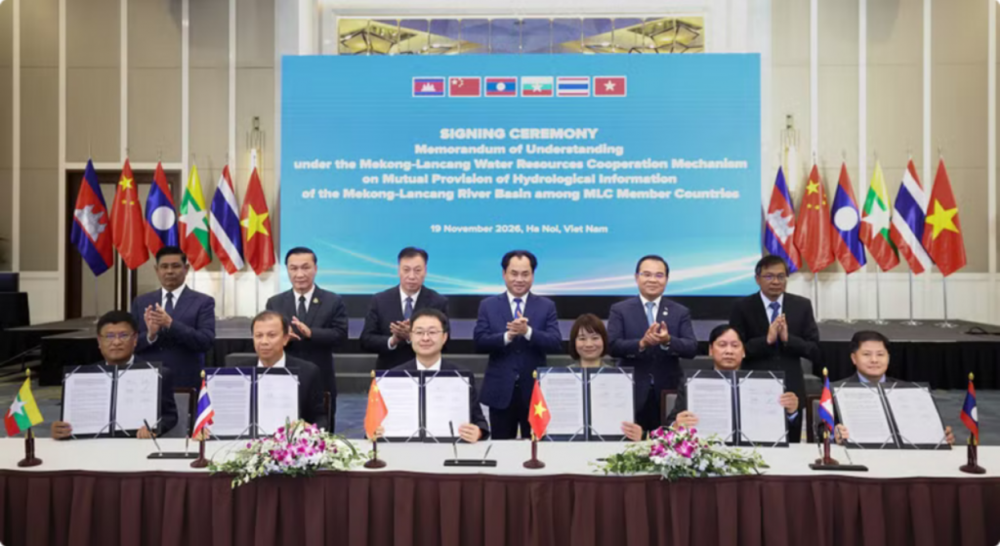
The meeting was co-chaired by Vietnam’s Minister of Agriculture and Environment, Trinh Viêt Hung, and China’s Vice Minister of Water Resources, Liu Dongshun. It was held to mark the10th anniversary of the establishment of the Mekong-Lancang Cooperation Mechanism.
Speaking at the event, Minister Trinh Viêt Hung praised the achievements of the past decade, particularly the expansion of hydrological data sharing and the strengthening of member countries’ water resource management capacities.
More than 70 projects under the Lancang-Mekong Special Cooperation Fund have already been implemented in areas such as rural water supply, small watershed management, dam safety, and hydrological monitoring.
Despite these achievements, member countries continue to face growing demand for water and energy, climate change, extreme weather events, and water quality issues. In response to these environmental and climate challenges, Vietnam has proposed three priority areas for cooperation.
The first is to implement the memorandum of understanding and expand information sharing—particularly regarding reservoir operations—with advance notifications of water releases or storage operations.
The second aims to strengthen coordination among the Mekong-Lancang Cooperation Mechanism, the Mekong River Commission, ASEAN, and subregional cooperation mechanisms, while promoting research and the application of science and technology.
The third priority focuses on projects designed to support livelihoods and strengthen the resilience of communities in the face of floods, droughts, and saltwater intrusion.
For his part, Chinese Vice Minister of Water Resources Liu Dongshun expressed a commitment to strengthening cooperation and ties among the countries in the region.
During the conference, the heads of the working groups from the six countries signed a memorandum of understanding on the sharing of hydrological data from the Mekong-Lancang Basin. Under the terms of this agreement, the countries agreed to exchange information from 24 key hydrological stations, including two in Vietnam, two in China, seven in Cambodia, six in Laos, one in Myanmar, and six in Thailand.
For Vietnam, access to upstream hydrological data is particularly important for monitoring water flows to the Mekong Delta, which is home to approximately 17 million people and is a major producer of rice, aquatic products, and fruits. The delta faces challenges such as sea-level rise, saltwater intrusion, drought, water shortages, erosion, and declining sediment inflows. Reliable, comprehensive, and timely data on upstream water conditions will improve forecasts and early warnings, enable better planning of production, and help safeguard people’s livelihoods.
The heads of delegation also adopted a joint declaration reaffirming their commitment to the sustainable management and use of water resources.
At the close of the conference, Minister Trinh Viêt Hung highlighted several fundamental principles: trust and transparency as the foundations of cooperation; prioritizing local communities in programs and projects; and translating commitments into concrete actions.
Source: lecourrier.vn/