
Senegal/Toward Scaling Up a Project to Improve Seeds and Climate-Smart Varieties
The Vision for Adapted Crops and Soils (VACS) project, which has developed climate-smart varieties of improved millet, cowpea, peanuts, and sorghum, could serve as a model on a national scale, said Bassirou Sine, director of the Senegalese Institute for Agricultural Research (ISRA) in Bambey, speaking in Thiès.
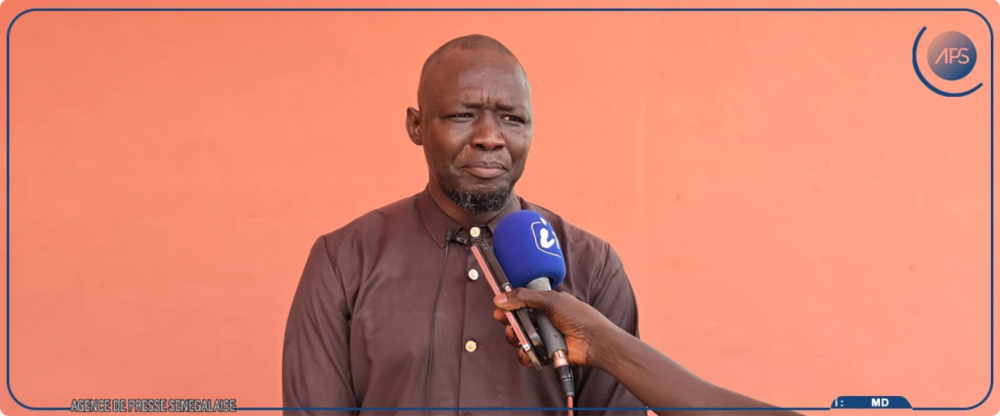
““This project could serve as a model to be implemented at the national level,” said Bassirou Sine during the closing ceremony for the VACS project, which was implemented over three years in twelve regions of Senegal, including Thiès, Kaffrine, Kaolack, Fatick, Ziguinchor, and Sédhiou.
“Most of the improved varieties are climate-smart. Whether it’s millet, cowpea, sorghum, or peanuts, the latest varieties developed are adapted to their growing regions,” said the researcher from the Senegalese Institute of Agricultural Research on Monday.
He emphasized that “significant efforts have been made regarding seeds—particularly cowpeas and millet—as well as partnerships between research institutions, seed companies, and the network of seed cooperatives involved in the Seed Producers’ Network for this project.”
According to the director of the ISRA in Bambey, the project has also trained producers to serve as liaisons.
“These initiatives need to be refined in the future, and that is how we will be able to establish a comprehensive and sustainable seed production network or system,” said the official.
“This approach should bear fruit, leading the country toward seed sovereignty, which will in turn lead us to food sovereignty,” he continued.
Each project partner gave a presentation showing “the quantity of seeds they produced during the project’s three-year duration, [which] amounts to dozens of metric tons.”
He clarified that although the seeds come at a cost, they remain affordable for farmers.
Mr. Sine explained that by combining available seed varieties with pre-basic seeds, it is possible to achieve production targets.
“I believe that it is through this approach, with multi-year planning, that we will be able to resolve the issue of seed availability for domestic production and achieve food sovereignty,” he continued.
“There are some very good varieties in Senegal, such as millet and cowpeas,” said Issoufou Kapran, chair of the Seed Systems Group.
According to him, “this project has shown that these are extremely important crops, yet they have been marginalized in terms of investment.”
Mr. Kapran noted that the goal of this project is to enable partners to ensure the production of very high-quality seeds—that is, “90 to 100 percent pure.”
Farmers will thus have a uniform variety on their plots that matches the characteristics defined by the researchers, he noted.
“If researchers say a variety has a maturity rating of 90, that is exactly what we will observe in the field,” Mr. Kapran said by way of example.
He called on policymakers to place greater importance on these crops. “We must,” he recommended, “place much greater importance on these traditional crops, because [they] are very hardy and well-adapted to the environment, especially today with climate change.”
Source: aps.sn/