Switzerland / Hiking, biking, jogging: The Swiss love to exercise in nature, outdoors
The Swiss are among the most physically active people in Europe. According to a study released Tuesday, more than half of the Swiss population is very physically active. Outdoor sports are very popular.
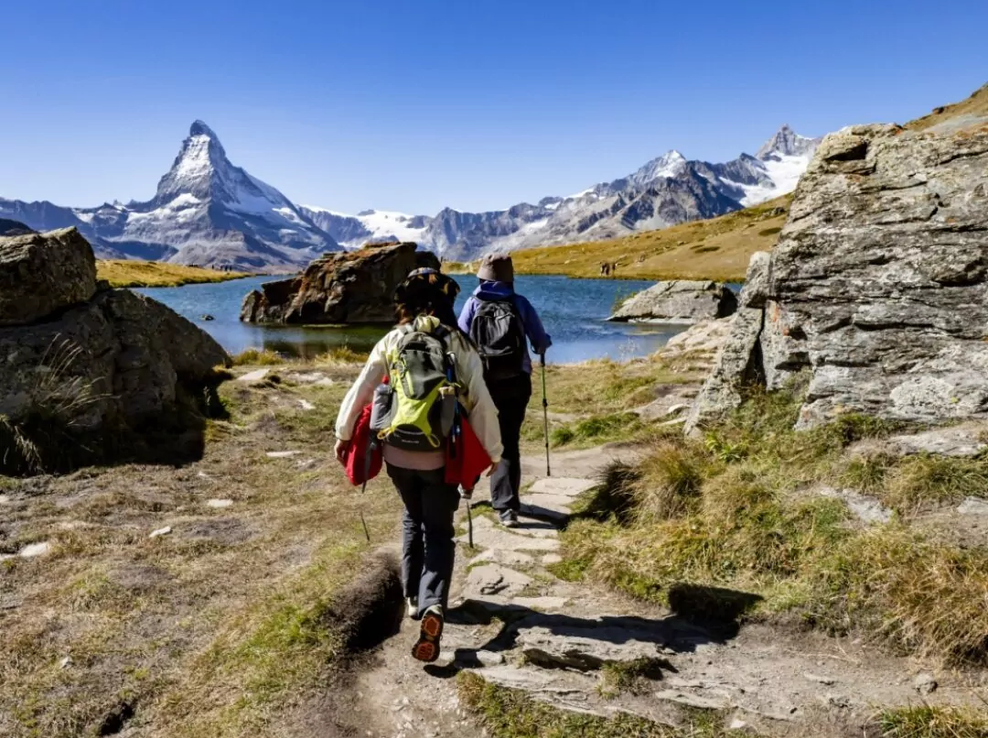
Hiking, cycling, swimming, skiing, jogging: The Swiss population is very active, preferring to exercise outdoors. More than half are very active, according to a study by the Federal Office of Sport (FOSPO). However, physical activity is influenced by socioeconomic factors: people with low incomes are less likely to participate in sports.
The Swiss people’s favorite sports remain hiking (practiced by 49% of the population), cycling (34%), swimming (25%), skiing (23%), and jogging (23%). However, these activities have lost popularity in recent years to weight training (20%) and yoga (16%), according to the “Sport Switzerland 2026” study published Tuesday, which takes stock of the past six years.
For the first time, fitness centers have more members than sports clubs: 22% of people aged 15 and older have a gym membership, while 19% are active in a sports club.
At a press conference, OFSPO Director Sandra Felix attributed this trend to the increasing individualization of society and the flexibility offered by fitness centers. “People want to exercise whenever they want.”
Sports Are Expensive
While the trend had been on the rise for years, the study notes that sports participation has plateaued at a high level. The proportion of very active people (52%) as well as that of inactive people (17%) remained virtually unchanged between 2020 and 2026.
It is impossible to say whether the sports boom observed in recent decades is truly coming to an end or whether it simply marks a pause before picking up again. Sports Minister Martin Pfister refused to call it a “crisis.” But the figures show that progress cannot be taken for granted. We must continue to expand support for sports.
The study also notes that sports-related spending remains at a high level and did not increase between 2020 and 2026. On average, it amounts to 2,100 francs per person per year. The lack of financial resources is, in fact, one of the main reasons for inactivity in sports.
“Someone with a lower income cannot afford a gym membership or ski gear,” said Mr. Pfister. More broadly, he emphasized the impact of socioeconomic factors on sports participation, such as education, age, gender, and background.
Including as Many People as Possible
The 2040 Strategy for Promoting Sports and Physical Activity aims to provide access to sports for as many people as possible, including those who are disadvantaged or have disabilities, the federal councilor continued. Efforts to promote sports among children and adolescents will also be strengthened.
The Federal Council is scheduled to present this strategy in early 2027. The cantons and municipalities play a major role in this area, Ms. Felix added. She cited the proposal to offer free sports programs in certain municipalities.
The study allows policymakers to adapt by identifying where the needs lie and what current trends are, Mr. Pfister further noted. He observed that sports today take many different forms. While more people are working out at fitness centers, nature remains the preferred setting for physical activity for two-thirds of the Swiss population.
Contact with nature, as well as health, physical fitness, and the enjoyment of being active, are the main motivations for participating in sports. Competition and the pursuit of performance are no longer priorities. Compared to other European countries, Switzerland remains extremely sports-oriented, on par with the Scandinavian countries. Sports enjoy a very positive image there, as well as widespread acceptance.
Impact of COVID-19
The study also notes differences between the linguistic regions. In French-speaking and German-speaking Switzerland, sports participation has remained more or less at 2020 levels. In contrast, a marked decline has been observed in Ticino. This could be a delayed consequence of the COVID-19 pandemic, given that this canton experienced more restrictions on sports activities than the rest of Switzerland.
The coronavirus has also led to an increase in physical activity at home. Over the past six years, the home is the only location for sports participation where the level of activity has increased.
Approximately 15,000 people participated in the representative study conducted by Lamprecht & Stamm Sozialforschung und Beratung on behalf of the Federal Office of Sport (FOSPO). The “Sport Suisse” study analyzes sports activity and participation among the Swiss resident population aged 15 and older every six years.
Source: Suisse.ch