
Benin/Vocational Training: Awaou BACO Mobilizes CFPA Leaders to Ensure a Successful Start to the 2026–2027 School Year
With just a few weeks to go before the start of the new apprenticeship year, the Minister of Small and Medium-Sized Enterprises and Employment Promotion, who is responsible for vocational training, wants to give new impetus to the Vocational Training and Apprenticeship Centers (#CFPA). Gathered for the first time at the initiative of a minister, the centers’ directors discussed the challenges they face and proposed solutions to attract more young people to the trades. Several innovations are expected to be implemented as early as the start of the next school year.
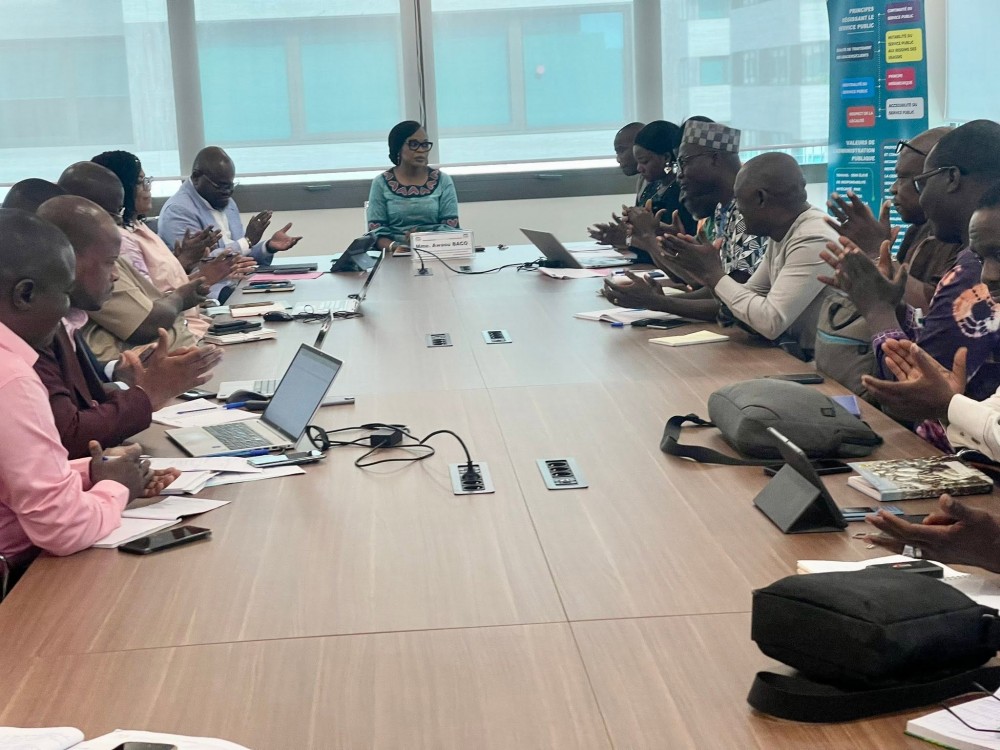
On August 4, 2026, the meeting room at the Ministry of Small and Medium-Sized Enterprises and Employment Promotion hosted a meeting intended to mark a turning point in the governance of vocational training. Led by Ms. #AwaouBACO, Minister of Small and Medium-Sized Enterprises and Employment Promotion, responsible for Vocational Training, the directors of the Vocational Training and Apprenticeship Centers (CFPA), technical officials from the Ministry, and #FODEFCA engaged in direct discussions about the future of these institutions and the conditions necessary for the success of the 2026–2027 apprenticeship year.
One notable aspect of this meeting was that, for several participants, it was the first time a minister had brought them together directly to listen to their experiences, challenges, and proposals. This approach underscores Ms. Awaou BACO’s stated commitment to bridging the gap between ministerial oversight and on-the-ground realities.
Listening to the Field to Take Action
The discussions brought to light several constraints that continue to affect the CFPA institutions. Inadequate infrastructure—particularly in areas with high productive potential—a lack of modern equipment, and certain challenges related to administrative staff and trainers all constitute obstacles to access to quality training and to youth employability. However, the meeting was not intended to be merely a session for identifying problems.
Above all, it provided an opportunity to move from diagnosis to action, by reviewing a roadmap and seeking concrete solutions in preparation for the start of the school year scheduled for September 28, 2026. The agreed-upon timeline includes, in particular, an assessment of staff and technical facilities, the identification of needs for instructors and equipment, the preparation of the national academic calendar, capacity-building for instructors, and a communication and outreach campaign designed to attract future students.
Beyond administrative and logistical issues, another challenge stands out as crucial: inspiring teenagers and young adults to choose vocational training.
The options are there. CFPA schools already offer a wide range of trades, from #metal fabrication to #automotive mechanics, including electricity, #carpentry, agriculture, agri-food, solar energy, IT, #foodservice, #sewing, and #leathercraft.
The challenge now is to raise awareness of these opportunities, highlight career paths, and challenge the perceptions that sometimes continue to deter young people from technical and vocational careers. With this in mind, several strategies for information, awareness-raising, and career guidance were selected following the discussions, with the goal of reaching out more to teenagers, young people, and their families to introduce them to the opportunities offered by the CFPA and the resulting career prospects.
Raising Awareness of Trades, Changing Perceptions
The meeting also highlighted several innovations designed to better align the CFPA with the government’s vision and the ambitions of the #MPMEPE. The challenge is to help these centers evolve so they can better meet regional needs, adapt to changes in the labor market, and support growing sectors. This approach requires better alignment between training, skills, business needs, job placement, and local economic development.
The start of the 2026–2027 academic year will thus be the first indicator of this new momentum. The plan also calls for data collection beginning October 12, 2026, on enrollment numbers, attendance rates, and challenges encountered, followed by a post-semester review and corrective measures. Through this meeting, Ms. Awaou BACO aims to integrate vocational training into a broader framework: training, certifying, integrating, and creating opportunities. For the Minister, the challenge is therefore twofold: improving training conditions and changing perceptions of vocational careers.
Source: Mpmepe