Togo/ PI-SPI: 30 million users and $190 million in transactions in less than a year
Ten months after its launch, the regional instant payment platform continues to expand across the WAEMU. While early adoption figures are encouraging, connecting all financial institutions remains a challenge ahead of the September deadline.
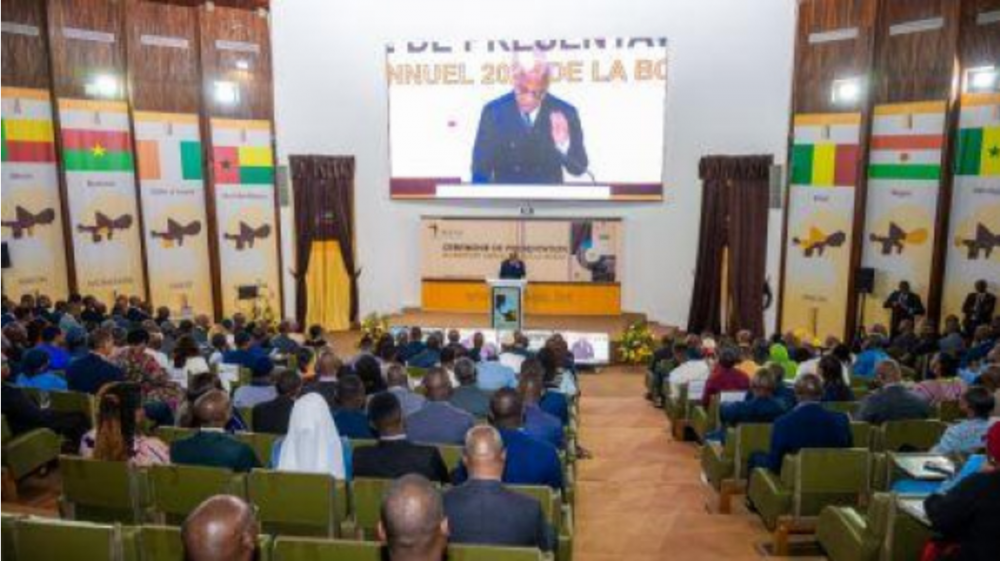
In Dakar, the Central Bank of West African States (BCEAO) reviewed the performance of its instant payment platform during the ceremony to present its 2025 annual report. As of July 20, 2026, PI-SPI had 30 million registered users, one million transactions, and 110 billion CFA francs ($190 million) in transactions.
The institution cited a “gradual momentum” in adoption for this interoperable instant payment platform, launched on September 30, 2025, across the eight countries of the West African Economic and Monetary Union (UEMOA).
“The Central Bank has chosen interoperability as the foundation for financial inclusion,” explained Djibril Diaw, Director General of Operations and Financial Innovation, who invited institutions not yet on board to join the system.
The initial observation can be summed up in one word: fragmentation. Until now, each customer was confined to their institution’s network. Sending money to someone with an account elsewhere often required withdrawing cash and then depositing it into the other network. This was a burden for users and a barrier to financial inclusion in a region where access to financial services now stands at 76% of the adult population, up from 14.6% two decades ago.
According to Central Bank Governor Jean-Claude Kassi Brou, PI-SPI aims to break down these barriers. “Every citizen must be able to conduct transactions with all financial institutions in the Union, regardless of their own bank, instantly, securely, and free of charge for individuals. A transfer is completed in a matter of seconds, with immediate notification to both parties. Merchants, for their part, can accept payments via a standardized QR code.”
But the system will only be fully effective once all stakeholders are connected. “If a stakeholder isn’t connected, their customers can’t benefit from it,” the governor warned.
“Connection security takes precedence over everything else”
Eighty institutions, mainly banks, are currently connected, compared to 74 at the end of December 2025 and 45 at launch. The ramp-up has slowed significantly.
This is because connectivity cannot be mandated. Each connected application becomes an entry point into an infrastructure that processes payments in real time, 24 hours a day. A security breach at a single participant would expose the entire system, which is protected by encryption compliant with banking standards and a monitoring system. “For PI, connection security takes precedence over everything else, ” summarized Ndeye Fatou Dieng Gueye, deputy director of payment systems and resources and head of the PI-SPI project, during a seminar attended by economic journalists from the Union on Tuesday, July 21.
Hence the deadline. The BCEAO has set September 30, 2026, as the deadline for banks, electronic money issuers, and payment institutions to connect to the system. Microfinance institutions, which are still conducting technical tests, have until June 30, 2027. These deadlines have already been extended once; the initial deadline had been set for June 30, 2026.
Another challenge remains. The 30 million people connected—representing nearly 40% of the Union’s adult population, estimated at between 75 and 80 million—constitute the customer base of the connected institutions; in other words, they are the population that can be reached through the platform. When compared to the one million transactions recorded since launch, these figures indicate above all that the infrastructure found its users before its uses were established.
Source: www.togofirst.com/