Senegal/Kanel: FONSTAB Focuses on Forage Crops to Develop the Sheep Industry
The Livestock Housing Support Fund (FONSTAB) advocates for the development of forage crops as an alternative to expensive livestock feed in order to promote livestock farming in the Kanel department, by capitalizing on the land potential and significant water resources available in this northern part of Senegal.
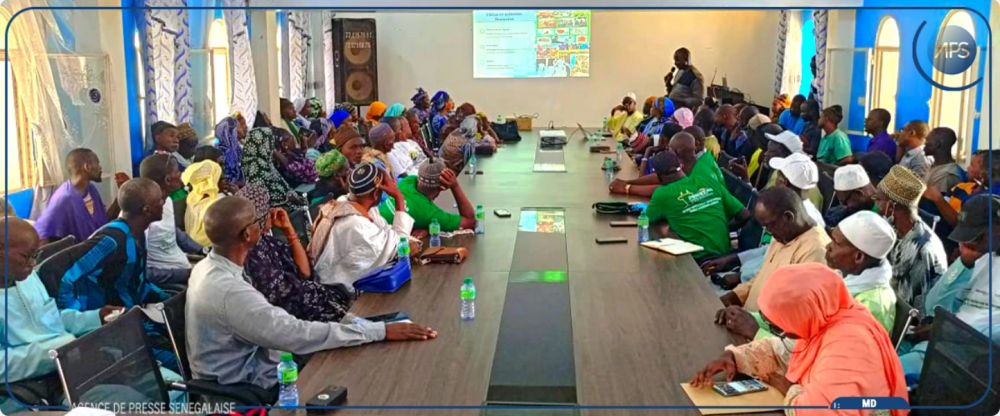
“We need to focus on forage crops in order to develop the sheep and cattle sectors,” said Youssoupha Diouf, head of FONSTAB’s Northern Zone Office.
Speaking at an awareness-raising workshop on this public mechanism dedicated to financing and modernizing the livestock sector, he emphasized that feed accounts for up to 70% of operating costs.
He added that “concentrated feed does not solve the problem, nor does natural grazing,” he noted.
It is for this reason, he emphasized, that the Livestock Housing Support Fund (FONSTAB) is focusing on forage crop cultivation.
In his view, this realistic goal can be achieved by tapping into “two resources that exist in this northern part of the country, namely land and water,” referring in particular to surface water, the river, and its various tributaries.
According to Youssoupha Diouf, even in Dièry, “farmers can find water in wells and boreholes, allowing them to work and cultivate at least one hectare of forage crops or alfalfa.”
“This can feed an entire herd for a whole year, with livestock feed available for several months. This will reduce costs, making the activity profitable,” the technician explained.
The head of FONSTAB’s northern regional office believes it will be very difficult for farmers to make their operations profitable using concentrated feed, due to the high price of corn and the high cost of production at feed mills.
“These factors make the price of livestock feed very expensive for the farmer,” he emphasized.
Source: aps.sn/